
Hydrocolloid Bandages for BlisterHydrocolloid Bandages for Blisters
Blisters can turn a simple walk, workout, shift at work, or pair of new shoes into something painful. They usually form when skin is exposed to repeated friction, heat, and moisture. The result is a small fluid-filled pocket that needs protection from more rubbing.
Hydrocolloid bandages are a practical option for blister care because they help cushion the area and create a flexible protective barrier over the skin. For heels, toes, fingers, and other friction spots, a cut-to-size hydrocolloid roll can be especially useful.
Why Do Blisters Happen?
Most everyday blisters are caused by friction. Shoes rub against heels, toes press against tight footwear, socks bunch up, or sports equipment repeatedly contacts the same area of skin. Over time, the top layers of skin separate and fluid collects underneath.
Common blister triggers include:
- New shoes, boots, or stiff work footwear
- Long walks, hiking, running, or sport
- Moisture from sweat or wet socks
- Repeated rubbing on heels, toes, palms, or fingers
- Pressure points from tight footwear or equipment
How Hydrocolloid Bandages Help Protect Blisters
A hydrocolloid bandage works differently from a basic plaster. It forms a soft dressing over the skin that can absorb surface fluid while helping keep the area covered. For blisters, the cushioning and flexible coverage are often the most important benefits.
Hydrocolloid bandages can help:
- Reduce rubbing between the blister and shoes or socks
- Cushion pressure points on heels and toes
- Protect the area from dirt and external moisture
- Stay in place during normal daily activity
- Make walking more comfortable while the skin is protected
Why Use a Hydrocolloid Roll Instead of Pre-Cut Pads?
Pre-cut blister pads are convenient, but blisters do not always appear in a neat standard shape. A heel blister may need a wider patch, a toe blister may need a smaller strip, and a finger blister may need a narrow custom piece.
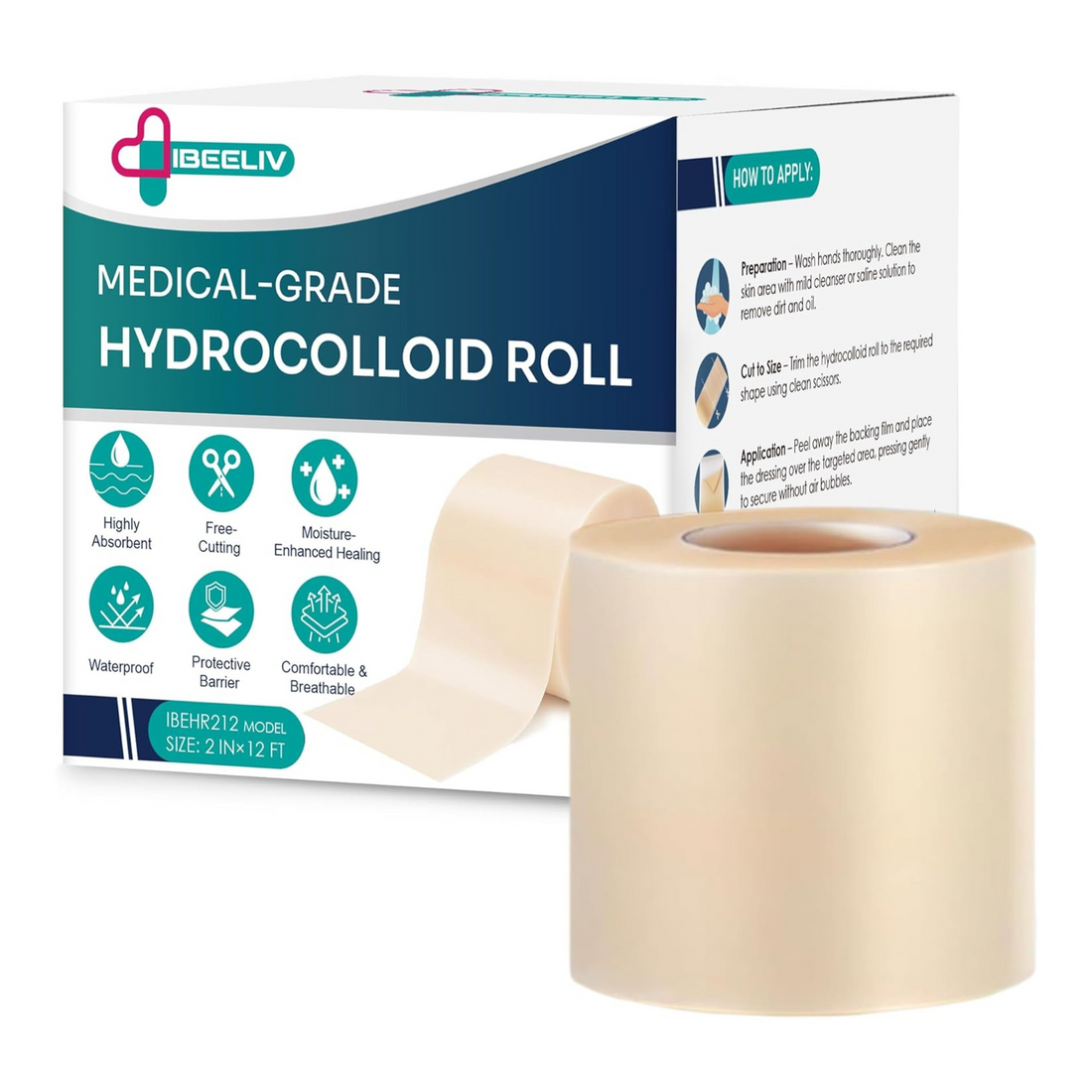
The IBEELIV Medical-Grade Hydrocolloid Roll is 5cm x 3.6m, so you can cut the dressing to match the area you want to protect. This makes it useful for blister care, minor wound care, acne patches, and other everyday skin protection needs.
Shop the IBEELIV Hydrocolloid Roll for blister and wound care
Where Can You Use Hydrocolloid Bandages for Blisters?
Hydrocolloid dressings can be used on many common friction areas, including:
- Heel blisters from shoes or boots
- Toe blisters from walking or running
- Side-of-foot rubbing from tight footwear
- Ball-of-foot pressure during sport
- Finger or palm blisters from tools, gym equipment, or repetitive work
How to Apply a Hydrocolloid Bandage to a Blister
- Clean the area gently and dry the surrounding skin well.
- Cut the hydrocolloid roll so the patch covers the blister with a small border around it.
- Round the corners with scissors if the patch will sit inside shoes. This can help reduce edge lifting.
- Apply the dressing smoothly without stretching it too tightly.
- Press the edges down gently so the dressing seals against the skin.
- Replace it if it loosens, leaks, becomes uncomfortable, or looks fully saturated.
Should You Pop a Blister First?
In many cases, it is better not to pop a blister. The skin roof helps protect the tender skin underneath. If a blister has already opened, clean the area gently before applying a dressing.
Do not use hydrocolloid dressings on infected wounds, deep wounds, severe burns, or blisters with spreading redness, pus, increasing pain, or fever. Seek medical advice if you are unsure, especially if you have diabetes, poor circulation, or a condition that affects healing.
Hydrocolloid Bandage vs Regular Bandage for Blisters
A regular bandage can cover a blister, but it may shift, wrinkle, or rub inside shoes. A hydrocolloid bandage is usually more cushioned and flexible, which makes it better suited for areas that keep moving.
A roll format also gives more control. Instead of forcing a fixed-size plaster onto an awkward spot, you can cut a shape for the heel, toe, finger, palm, or other pressure point.
Tips to Prevent Blisters
- Break in new shoes gradually before long walks.
- Wear socks that fit well and help manage moisture.
- Cover hot spots early before a full blister forms.
- Use a cut-to-size hydrocolloid patch on areas that often rub.
- Replace lifted or dirty dressings instead of trying to reuse them.
Blister Care FAQ
Can hydrocolloid bandages be used on heel blisters?
Yes. Hydrocolloid bandages are commonly used to protect heel blisters from shoe friction. Cut the patch large enough to cover the blister and the surrounding rubbing area.
Can I use hydrocolloid bandages before a blister forms?
Yes. If you feel a hot spot on your heel or toe, applying a hydrocolloid patch can help reduce rubbing before the skin becomes more irritated.
How long should I leave a hydrocolloid bandage on a blister?
Replace it when it loosens, becomes fully saturated, leaks, or feels uncomfortable. Do not leave a dirty or lifted dressing in place.
Can I shower with a hydrocolloid bandage?
Many hydrocolloid dressings provide water-resistant protection, but avoid soaking the area for long periods. Replace the patch if water gets underneath the edges.
Final Thoughts
Blisters are often caused by simple friction, but the right dressing can make a big difference. Hydrocolloid bandages help cushion the area, protect the skin, and reduce rubbing during everyday movement.
If you want flexible blister protection for heels, toes, fingers, and other friction spots, the IBEELIV Hydrocolloid Roll for Wound Care gives you a cut-to-size option that fits more situations than a standard fixed-size bandage.