
Hydrocolloid Roll for Wound Care: What It Is, When to Use It, and How to Cut It
Hydrocolloid bandages are one of the most practical dressing options for everyday wound care. They are designed to protect minor wounds, blisters, small superficial burns, and acne spots while helping maintain a moist environment over the skin.
Unlike a regular bandage that simply covers the area, a hydrocolloid dressing forms a flexible protective layer. This makes it useful for people who want a dressing that stays in place, feels comfortable, and can be cut to match different wound sizes.
What Are Hydrocolloid Bandages?
Hydrocolloid bandages are self-adhesive dressings made with gel-forming materials. When the dressing comes into contact with wound fluid, it can form a soft gel-like layer. This helps cushion the area and keep the wound protected from friction, dirt, and external moisture.
They are commonly used for minor cuts, blisters, acne patches, light superficial burns, and areas where the skin needs gentle protection. Because they are flexible and adhesive, they can often stay in place better than standard gauze or basic adhesive strips.
How Do Hydrocolloid Bandages Work?
Hydrocolloid dressings work by creating a sealed environment over the affected skin. This helps reduce exposure to outside irritants while supporting a moist wound environment, which is often preferred for superficial wound protection.
As the dressing absorbs fluid, it may turn white or cloudy. This is normal and usually means the hydrocolloid material is interacting with moisture from the skin or wound surface.
When Should You Use Hydrocolloid Bandages?
Hydrocolloid bandages are useful for many everyday skin concerns, especially when the wound is minor and not heavily bleeding. Common uses include:
- Minor cuts and scrapes
- Blisters from shoes, sport, or friction
- Small superficial burns
- Pimple patches for acne care
- Areas that need waterproof protection
- Skin that needs cushioning from rubbing
They are not suitable for every wound. Do not use hydrocolloid dressings on deep wounds, infected wounds, serious burns, or wounds with heavy bleeding. If you see spreading redness, swelling, pus, fever, or increasing pain, seek medical advice.
Hydrocolloid Roll vs Regular Bandages
Regular bandages are convenient, but they come in fixed sizes. This can be limiting when the wound is an unusual shape or when you need a longer strip for flexible coverage.
A hydrocolloid roll gives you more control. You can trim the dressing into patches or strips depending on the area you want to cover. This is especially helpful for blisters, acne spots, fingers, heels, knees, elbows, and other areas where standard bandages may not fit well.
Why Choose a Cut-to-Size Hydrocolloid Roll?
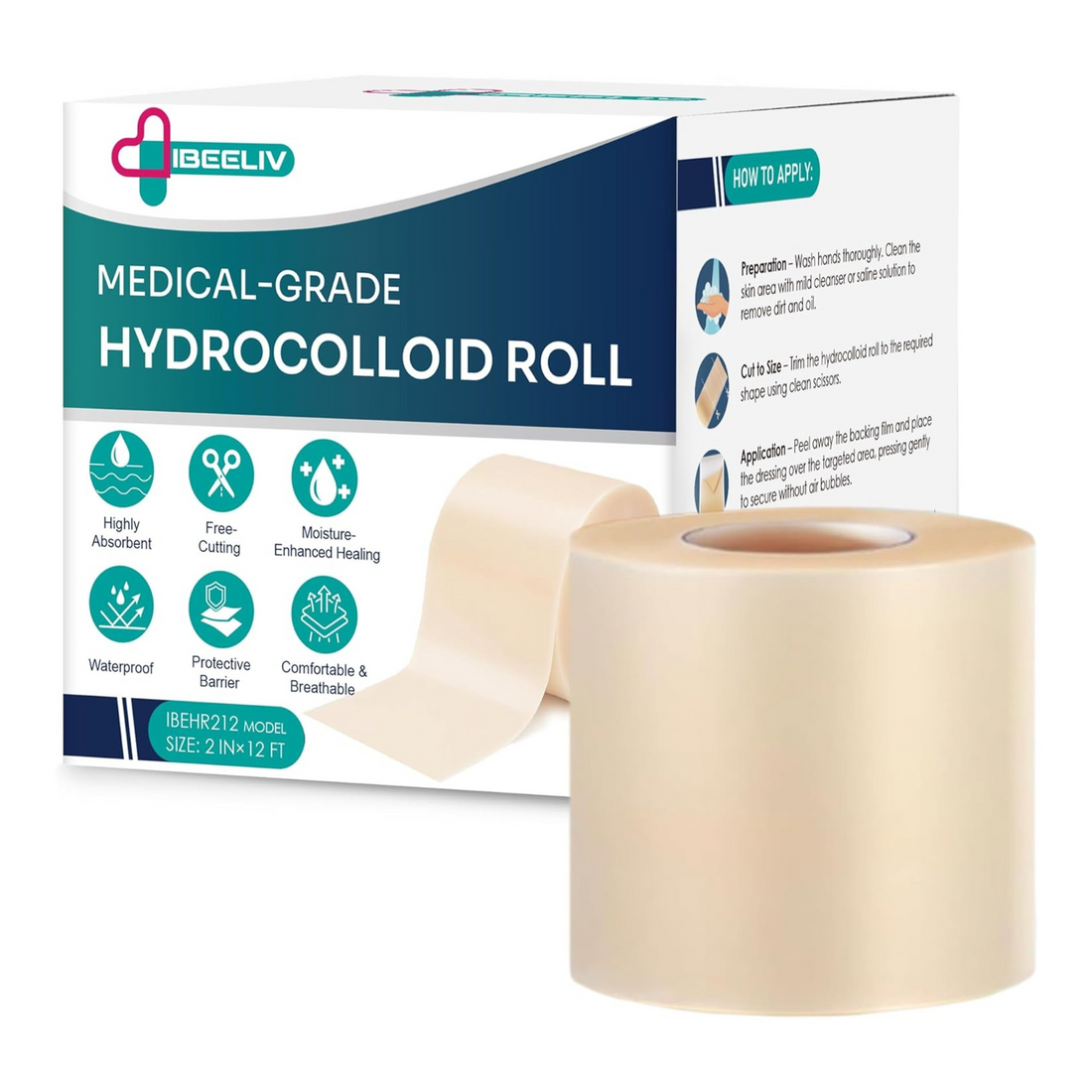
The IBEELIV Medical-Grade Hydrocolloid Roll is designed as a 5cm x 3.6m cut-to-size dressing. That means you can create small patches, longer strips, or custom shapes depending on your needs.
This format is useful because one roll can serve multiple purposes at home: wound care, blister protection, acne care, and waterproof coverage for minor skin concerns.
View the IBEELIV Hydrocolloid Roll for Wound Care
How to Use Hydrocolloid Bandages
- Clean the skin gently and make sure the area is dry.
- Cut the hydrocolloid roll to the size you need.
- Apply the dressing over the affected area without stretching it too tightly.
- Press the edges down gently to help it seal.
- Replace the dressing when it loosens, becomes fully saturated, or according to your care needs.
Can Hydrocolloid Bandages Be Used for Pimples?
Yes, hydrocolloid material is commonly used in pimple patches. It can help cover the spot, reduce touching, and absorb surface fluid. A hydrocolloid roll allows you to cut your own pimple patches in different sizes, which can be helpful for larger or multiple spots.
For acne care, apply only to clean, dry skin. Avoid using it over harsh active skincare products if your skin is already irritated.
Are Hydrocolloid Bandages Waterproof?
Many hydrocolloid dressings are designed to provide water-resistant or waterproof protection. This can help keep the area covered during normal daily activity. However, avoid soaking the dressing for long periods, and replace it if the edges lift or water gets underneath.
Hydrocolloid Bandages FAQ
How long should I leave a hydrocolloid bandage on?
It depends on the area and how much fluid the dressing absorbs. Replace it if it loosens, leaks, becomes uncomfortable, or looks fully saturated.
Can I cut hydrocolloid bandages?
Yes. A hydrocolloid roll is made for cut-to-size use, so you can trim it into patches or strips.
Can hydrocolloid bandages help blisters?
They can help protect blisters from friction and rubbing. This is one of the most common everyday uses for hydrocolloid dressings.
Can I use hydrocolloid bandages on burns?
They may be used for small superficial burns, but not for serious burns, infected burns, or large areas. Seek medical advice for anything more than a minor burn.
What is the difference between hydrocolloid tape and hydrocolloid bandages?
They are closely related. “Tape” or “roll” usually refers to a longer cut-to-size format, while “bandage” or “patch” often refers to pre-cut pieces.
Final Thoughts
Hydrocolloid bandages are a useful addition to a home first aid kit because they are flexible, protective, and suitable for many minor skin concerns. If you want one dressing that can be cut for wounds, blisters, burns, and acne care, a hydrocolloid roll is a practical option.
The IBEELIV Medical-Grade Hydrocolloid Roll is designed for flexible cut-to-size use, making it easy to create the right shape for everyday wound care needs.